ServicesSealants
Dental Sealants for Kids in Plympton
Sealants are a thin coating we paint into the grooves of your child's back teeth, where brushes miss and cavities often start. The visit is quick and comfortable. There are no shots and no drilling, and we explain your insurance rules before we begin.
What Sealants Do and When They Make Sense
Molars have deep pits and grooves on their chewing surfaces. Many of those grooves are narrower than a single toothbrush bristle, so food and bacteria settle in and stay. That is why so many childhood cavities begin on the tops of back teeth, even in kids who brush well.
A sealant is a tooth-colored or clear resin that flows into those grooves and hardens. It smooths the surface so it is easier to keep clean and harder for decay to get started. We usually recommend sealants as soon as the first permanent molars come in, around age six, and again when the second molars arrive, around age twelve. Some baby molars with very deep grooves benefit too.
We keep the decision simple. We look at each tooth, show you what we see, and tell you plainly which teeth would benefit and which do not need it. If a groove already has early decay, we say so and explain the options before anything is done.
What Your Child's Sealant Visit Includes
- A tooth-by-tooth check
- Before we seal anything, we examine each molar and premolar. Sealing over active decay is not good care, so we make sure every tooth is healthy first.
- Gentle cleaning of the grooves
- We polish the chewing surfaces so the sealant bonds to clean enamel. This part feels much like a regular cleaning.
- Careful drying and isolation
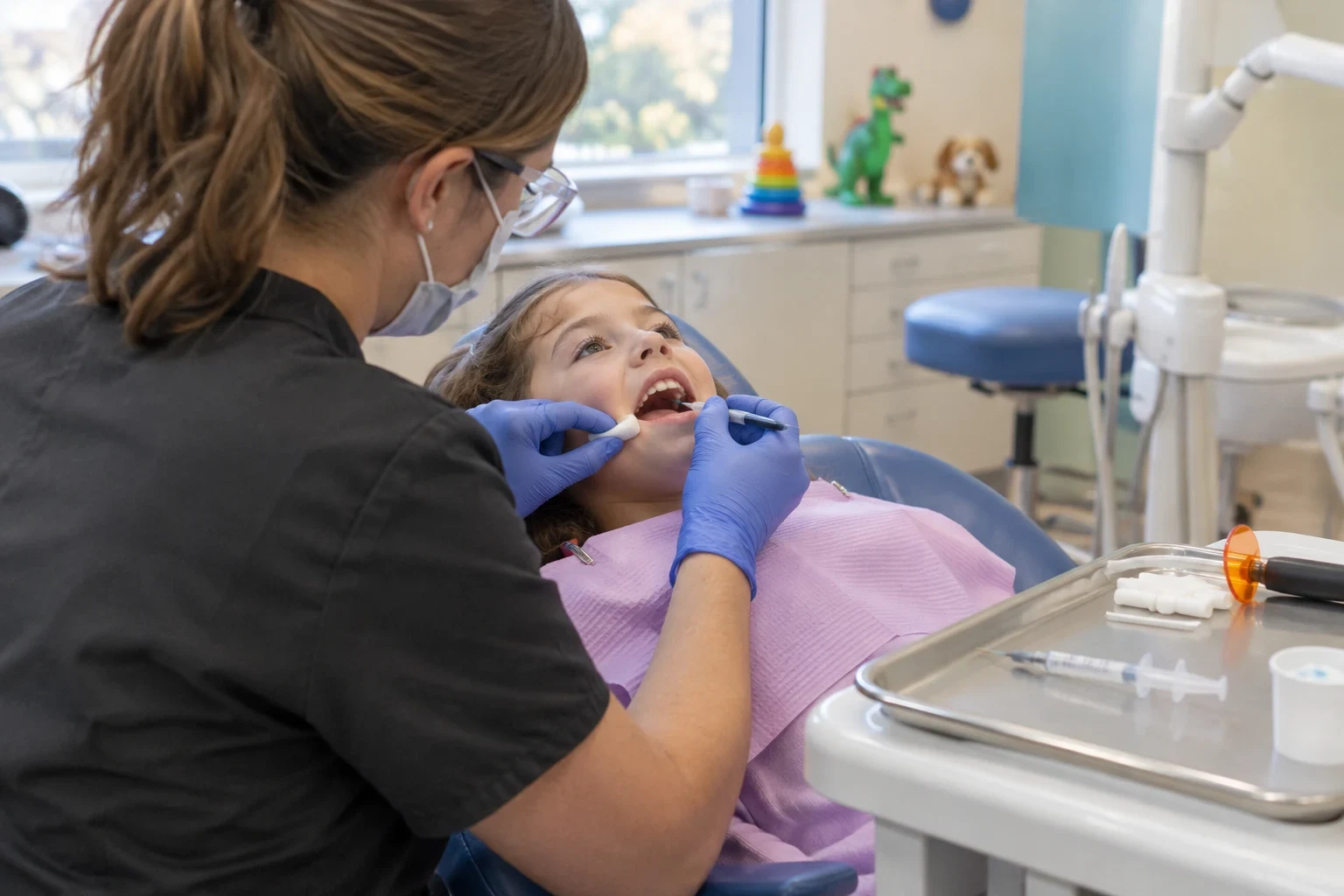
- A sealant only holds if the tooth stays dry while it is placed. We use small cotton rolls and a soft suction tip to keep saliva away, and we explain each tool to your child before using it.
- Placement and a quick light cure
- We paint the sealant into the grooves and harden it with a small blue light in a few seconds per tooth. Your child can eat and drink normally right after.
- A bite check
- We have your child bite down to make sure nothing feels high or bumpy, and smooth any spot that does.
- Follow-up at regular exams
- At each exams and cleanings visit we check that the sealants are intact and touch up any area that has worn.
Signs Your Child Could Use Sealants
New permanent molars are coming in
The first adult molars appear behind the baby teeth around age six, often without parents noticing. Sealing them soon after they fully erupt protects them during the years when cavities are most likely.
Deep or stained grooves
If you see dark lines or sticky spots in the grooves of back teeth, those pits are trapping food. That is often a sign the surface would benefit from a sealant.
A history of cavities
Kids who have had fillings before are more likely to get new cavities. Sealants are one of the simplest ways to lower that risk on healthy back teeth.
Brushing the back teeth is a struggle
Young kids often skip the molars, and teens in braces have trouble reaching them. A sealed surface is easier to keep clean when brushing is less than perfect.
Frequent snacks or sweet drinks
Sipping juice or sports drinks through the day keeps the grooves bathed in sugar. Sealants add a layer of protection while you work on habits.
How Sealant Day Works
- 1
A calm start
We greet your child, show them the chair and the light, and let them ask questions. You are welcome to stay close by.
- 2
Check and clean
We look at each tooth that may be sealed and polish the chewing surfaces. If we find early decay, we stop and talk with you before going further.
- 3
Prepare the surface
A mild gel is placed on the grooves for a short time, then rinsed off. This roughens the enamel slightly so the sealant grips it. It does not hurt and needs no numbing.
- 4
Seal and harden
We paint on the sealant, cure it with the blue light, and check the bite. Most kids are done in well under an hour, depending on how many teeth are treated.
- 5
Go home and eat normally
There is no recovery time. We let you know when your child's next exam is due so we can keep an eye on the sealants.
What Affects the Cost of Sealants
Sealants are one of the more affordable preventive services, and the price mostly depends on how many teeth are treated and what your plan allows. Many insurance plans cover sealants, but often with rules about age, which teeth qualify and how often they can be replaced. We go over those rules with you in plain language before we start, so you know what to expect.
- Number of teeth
- Sealants are priced per tooth. A child with four new molars will have a different total than a teen getting second molars and premolars sealed.
- Your insurance plan's rules
- Some plans cover only permanent molars, only up to a certain age, or only once in a set number of years. We check these details so there are no surprises.
- Early decay in a groove
- If a groove has a small area of decay, it may need a small filling before or instead of a sealant. We explain the difference and the cost before any work is done.
- Touch-ups over time
- Sealants can wear with chewing. A small repair at a later visit is usually simple, and we tell you when one is needed.
Sealant Questions Parents Ask
Something not covered here? (781) 429-3471
Does getting sealants hurt?
No. There are no shots and no drilling. The most your child will notice is a sour taste from the prep gel and keeping their mouth open for a few minutes. Most kids find it easier than a cleaning.
How long do sealants last?
Sealants often last several years, and many hold up through the cavity-prone years of childhood. They can chip or wear with chewing, so we check them at every exam and touch up any worn spots.
Are sealants safe? I have read about BPA.
It is a fair question, and we are happy to talk it through. Any trace exposure from a sealant is extremely small and short-lived, and the protection against decay is real. If you have concerns, ask us at the visit and we will walk you through the material we use.
Do sealants replace brushing and fluoride?
No. Sealants protect the chewing surfaces, but cavities can still form between teeth and along the gumline. Brushing, flossing and fluoride treatment still matter, and sealants work best alongside them.
Can baby teeth get sealants?
Sometimes. If a baby molar has deep grooves or your child is prone to cavities, sealing it can help it last until it falls out naturally. We will tell you honestly whether it is worth doing for your child.
How do I pay for sealants?
We accept MasterCard, Visa, Discover, most insurance plans and CareCredit Patient Payment Plan. When you call, we can talk about your plan so you know what is covered before the visit.
Protect Those New Molars
If your child's back teeth are coming in, now is a good time to seal them. Families from Kingston, Halifax, Carver and nearby towns can set up an appointment or register a new patient with one phone call.