ServicesRoot Canals
Root Canals for Kids in Plympton
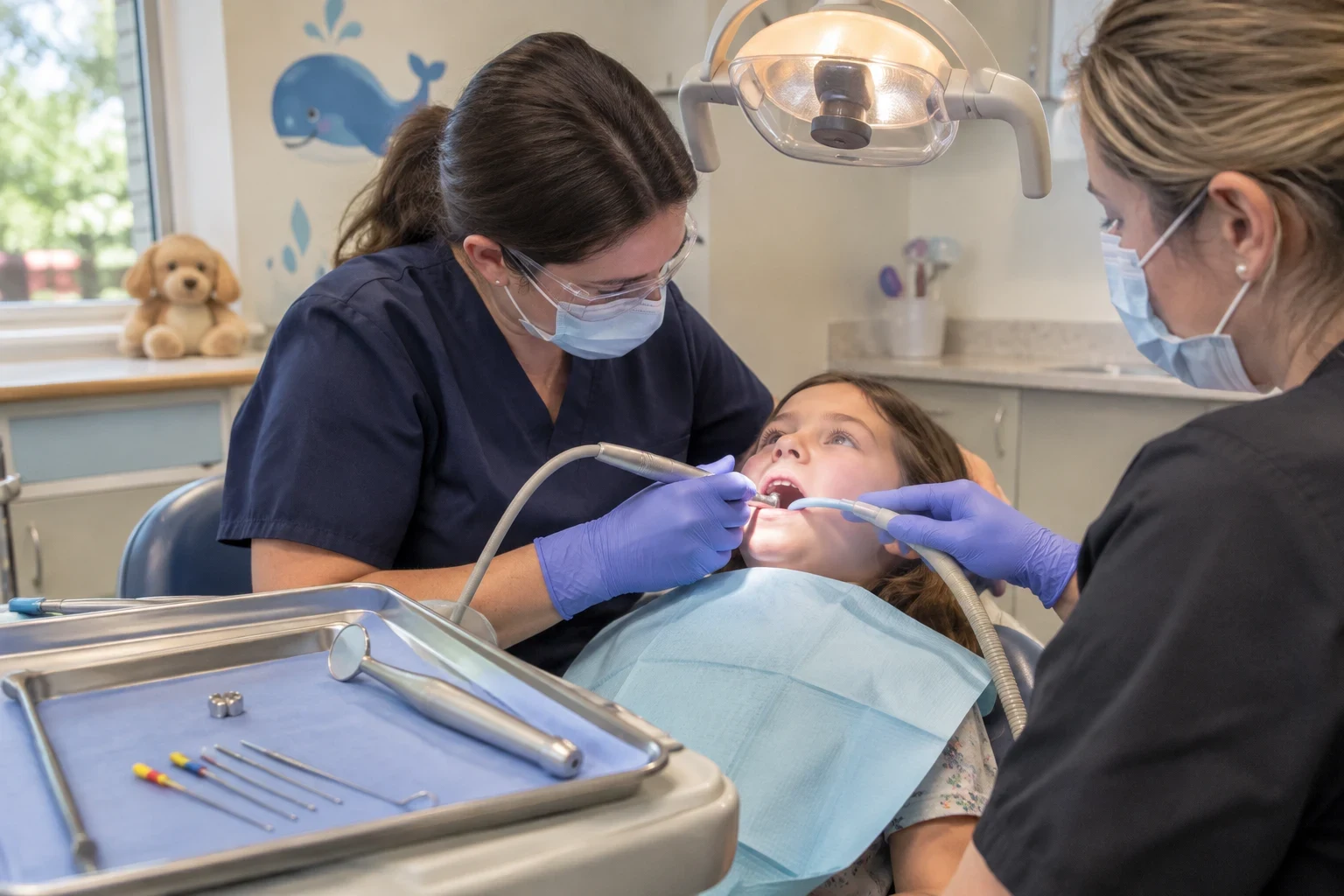
When decay or an injury reaches the nerve inside a tooth, a root canal can save it and stop the ache. We treat both baby teeth and permanent teeth gently. Before we start, we explain each step to you and your child in plain words.
What a Root Canal Means for a Child
Every tooth has soft tissue inside called the pulp, with nerves and blood vessels. When a cavity gets deep enough or a fall cracks a tooth, that pulp can become inflamed or infected. Left alone, it hurts, and the infection can spread to the bone and the adult tooth forming underneath.
For kids, a root canal usually means a pulpotomy or a pulpectomy. A pulpotomy removes only the damaged pulp in the crown of a baby tooth and leaves the healthy roots in place. A pulpectomy cleans out the pulp in the roots too. Teens with permanent teeth may need a full root canal, much like an adult.
Saving the tooth keeps your child chewing comfortably and holds space for the adult tooth. We show you the x-ray, tell you which treatment fits and why, and give you an honest answer if an extraction makes more sense.
What the Treatment Includes
- Exam and x-rays
- We look at the tooth, test how it responds, and take x-rays to see how deep the problem goes and whether the roots and bone are healthy.
- Gentle numbing
- We numb the area slowly and talk your child through it. Kids who are anxious or very young may do better with our sedation dentistry options, which we will discuss with you first.
- Removing the damaged pulp
- We clear away decay and the inflamed or infected pulp, then clean and disinfect the space inside the tooth.
- Medicated filling
- Baby teeth get a soothing medicated material that the body can absorb as the tooth loosens. Permanent teeth get a lasting root filling.
- A crown to protect it
- A treated tooth is weaker, so most get a pediatric crown the same visit. This keeps the tooth from breaking while it does its job.
Signs Your Child May Need a Root Canal
A toothache that lingers
Pain that stays after eating, or that wakes your child at night, often means the pulp is involved, not just the surface.
Swelling or a gum bump
A small pimple-like bump on the gum near a tooth can be a sign of infection draining from the root. Swelling of the face or a fever with tooth pain should be checked promptly.
Sensitivity that hangs on
A quick zing from cold is common. Sensitivity to hot or cold that lasts several seconds or longer is worth a look.
A tooth that darkens after a fall
A front tooth turning gray or brown after a bump can mean the nerve was damaged, even if your child says it does not hurt.
A deep cavity on an x-ray
Sometimes we spot decay that is close to the nerve during a routine exam, before your child feels anything.
How the Visit Goes
- 1
We talk first
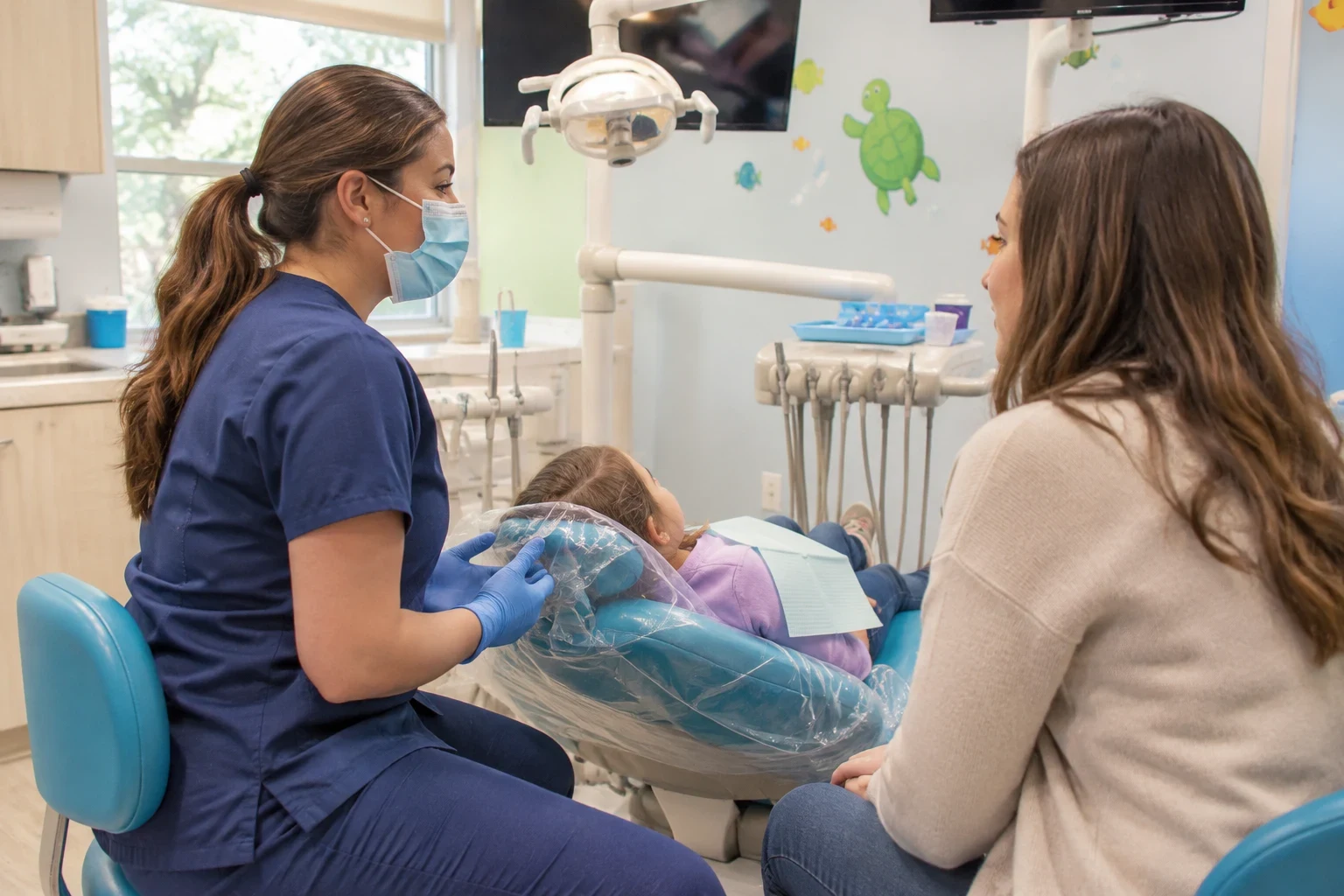
We go over the x-ray with you, explain the treatment we recommend, and answer your questions before anything begins.
- 2
Getting comfortable
We numb the tooth and place a small rubber shield to keep it clean and dry. We use simple, kid-friendly words for each tool so nothing is a surprise.
- 3
Treating the tooth
We remove the damaged pulp, clean the space, and fill it. Most pulpotomies on baby teeth take well under an hour.
- 4
Crown and home care
We usually place a crown the same day, then tell you what to expect over the next few days, including soft foods and when to call us.
What Affects the Cost
We give you a clear estimate after the exam and x-rays, so you know the cost before treatment begins. We accept MasterCard, Visa, Discover, most insurance plans and CareCredit Patient Payment Plan, and we can help you understand what your plan covers.
- Type of treatment
- A pulpotomy on a baby tooth is a smaller procedure than a pulpectomy or a full root canal on a permanent tooth.
- Which tooth
- Back molars have more roots and canals than front teeth, which adds time and work.
- The crown
- Most treated teeth need a crown, and the type of crown chosen affects the total.
- Sedation
- If your child needs sedation to stay comfortable, that is a separate part of the estimate.
Root Canal Questions from Parents
Something not covered here? (781) 429-3471
Why fix a baby tooth that will fall out anyway?
Some baby molars stay in until age 10 to 12. Losing one early can let nearby teeth drift and block the adult tooth. Saving it also clears the infection so it does not affect the tooth developing underneath.
Will it hurt my child?
The tooth is fully numbed, so most kids feel pressure rather than pain. The area may be a bit sore for a day or two afterward. A children's pain reliever, as directed for their age, usually handles it.
Is pulling the tooth a better option?
Sometimes, and we will tell you if so. If the tooth is too damaged or close to falling out, an extraction may be the better choice, sometimes with a space maintainer. We walk you through both options so you can decide.
How long does the visit take?
Most visits for a baby tooth take about an hour, including the crown. A permanent tooth in a teen may take longer or need two visits. We will give you a realistic time when you book.
What should my child eat afterward?
Wait until the numbness wears off so your child does not bite their cheek or tongue. Soft foods are best for the rest of the day. After that, normal eating and brushing are fine.
Let's Take Care of That Tooth
If your child has a lingering toothache or a tooth that changed color after a fall, we can take a look and explain what we see. Families from Plympton, Kingston and Halifax visit us for gentle care.