ServicesFillings
Kids' Fillings in Plympton
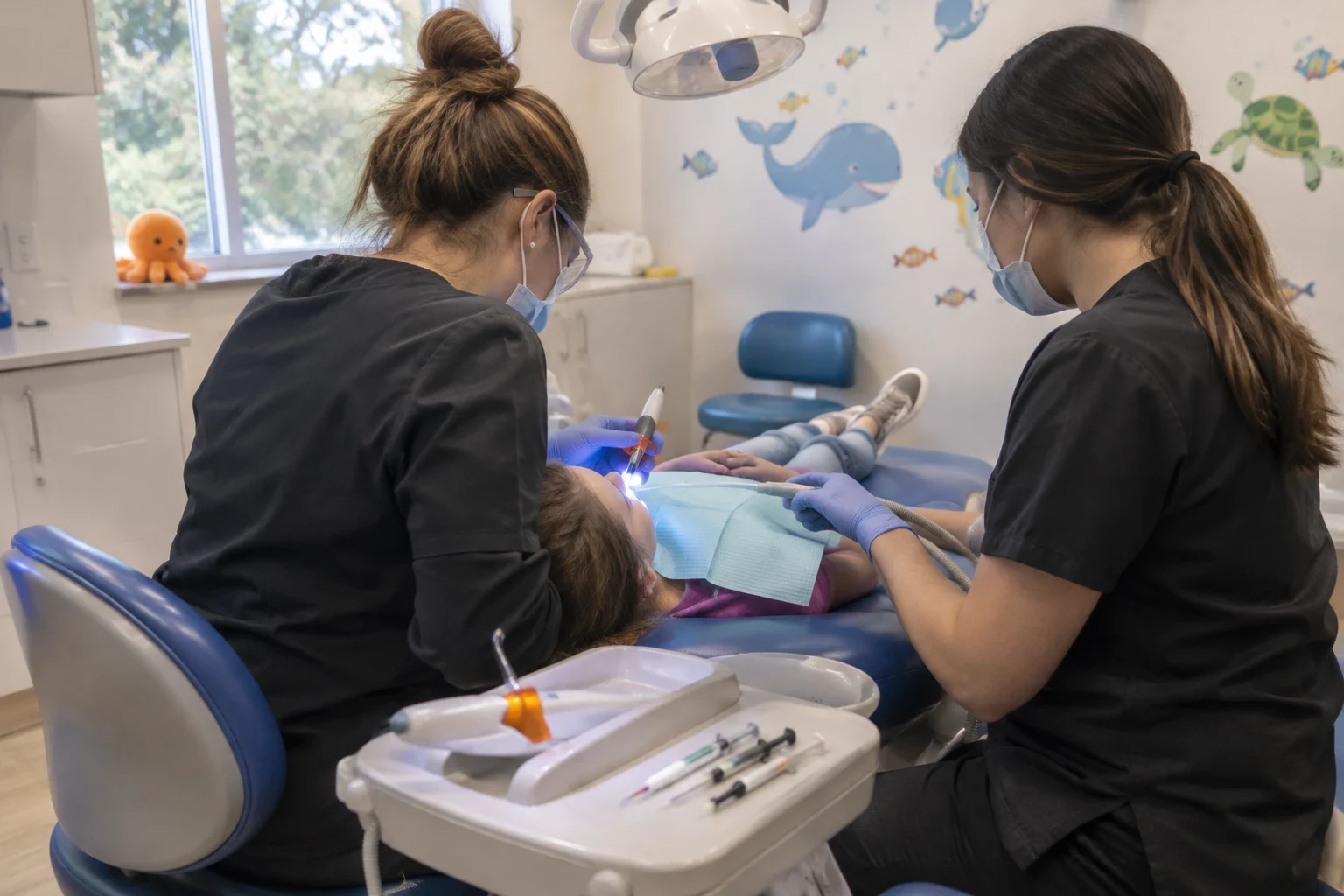
When a cavity shows up, we fix it gently and explain everything first. You see the X-ray, hear your options in plain words and give your OK before we start. Most kids head back to school or play the same day with a comfortable, healthy tooth.
What a filling does for your child
A filling removes the soft, decayed part of a tooth and seals the space so the cavity cannot keep growing. Caught early, most cavities need nothing more than this. Left alone, the same spot can reach the nerve and turn into a job for a pediatric crown or even a root canal.
Parents often ask whether baby teeth are worth filling since they fall out anyway. Many back teeth stay in place until age 10 to 12. They help your child chew, speak clearly and hold room for the adult teeth coming in underneath, so we treat them seriously.
We keep the visit calm and kid-friendly. Before anything happens, we walk you through what we saw, what we recommend and what the standard of care calls for, without jargon or pressure.
What's included in a filling visit
A look at the X-ray together
We show you the image and point to the cavity so you know exactly what we are treating and why.
Numbing that kids tolerate well
A flavored gel goes on first to numb the surface. Then we place a small amount of local anesthetic slowly while talking your child through it.
Tooth-colored material
Most fillings we place are tooth-colored composite that bonds to the tooth and blends in. For some baby teeth we may suggest glass ionomer, which releases a little fluoride over time.
A dry, protected work area
We keep the tooth dry with cotton rolls or a small rubber shield, which helps the filling bond properly and keeps water and bits of material away from your child's throat.
Bite check and polish
We check that the bite feels normal and smooth the filling so nothing catches the tongue.
Aftercare in plain words
You leave knowing how long the numbness lasts, what to eat and what to watch for that evening.
Signs your child may need a filling
- Chalky white or brown spots
- White spots near the gumline are early weak enamel. Brown or dark spots, especially in the grooves of back teeth, often mean decay has started.
- Wincing at sweets or cold drinks
- A quick zing from ice cream or juice can mean a cavity has reached the softer layer under the enamel.
- Chewing on one side
- Kids rarely say a tooth hurts. Favoring one side or suddenly refusing crunchy foods is often the clue.
- Food packing between teeth
- If floss shreds or food keeps getting stuck in the same spot, a cavity between the teeth may be opening a gap.
- A visible hole or chip
- Any pit you can see or feel with a fingertip deserves a look soon, before it grows.
How the appointment goes
- 1
Talk first, then treat
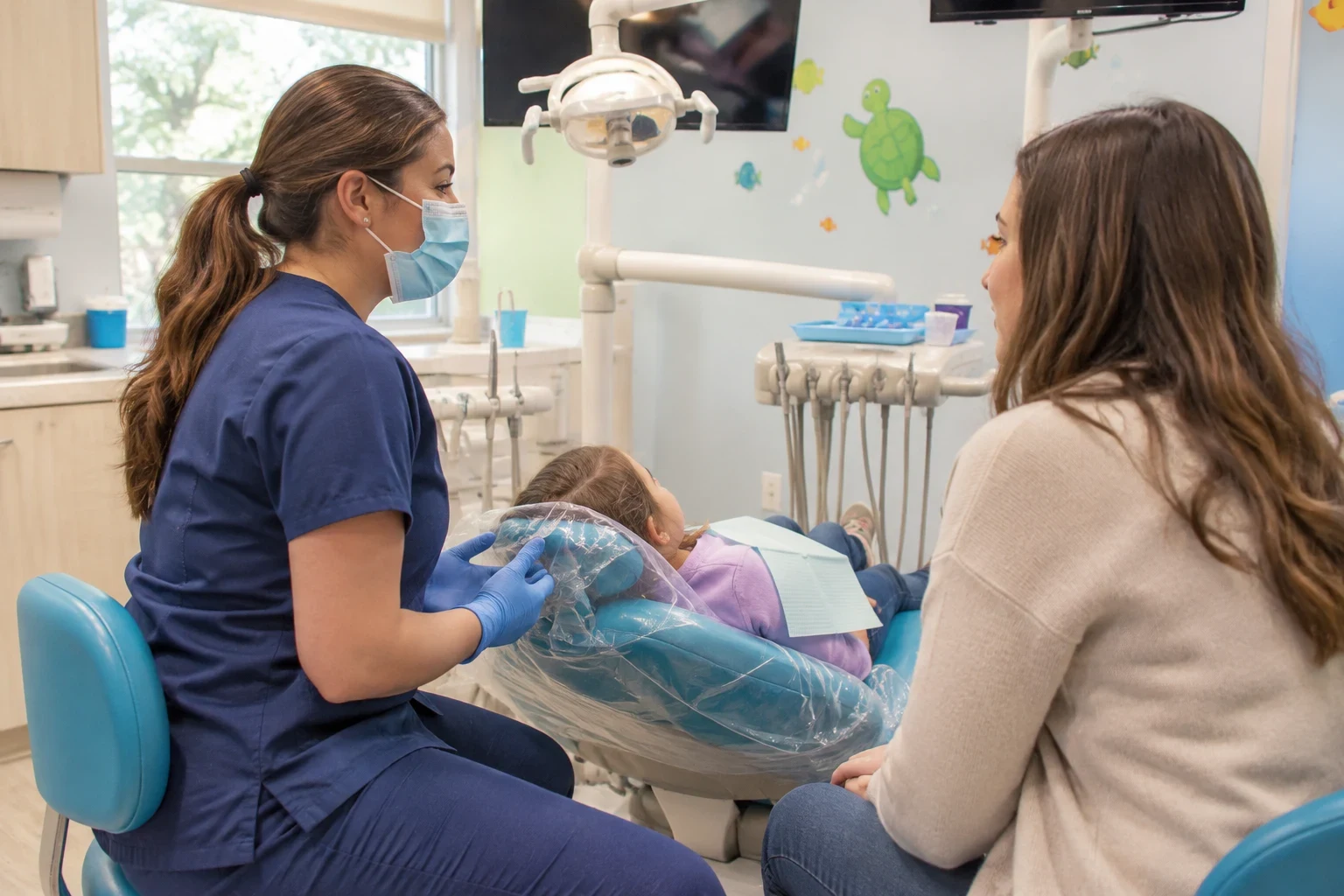
We review the X-ray and plan with you, answer questions and get your consent. Your child gets a simple, friendly preview of the tools they will see and hear.
- 2
Gentle numbing
Gel first, then the local anesthetic, given slowly. We wait until the tooth is fully numb before starting.
- 3
Clean out the decay
We remove only the soft, decayed part and keep as much healthy tooth as possible. Most single fillings take well under an hour.
- 4
Place and shape the filling
The material goes in, a blue light sets it, and we shape it to fit your child's bite.
- 5
Home with a plan
The lip and cheek stay numb for a couple of hours. Stick to soft foods until it wears off and keep an eye out for chewing or biting the numb lip.
What affects the cost of a filling
Every filling is priced by the tooth and the work it needs, and we go over the expected cost with you before treatment. We accept MasterCard, Visa, Discover, most insurance plans and CareCredit Patient Payment Plan. Your plan's coverage often makes the biggest difference in what you pay.
- Size and number of surfaces
- A small spot on one surface takes less time and material than a cavity that wraps around two or three sides of a tooth.
- How many teeth need work
- Several cavities can sometimes be handled in one visit, which also means fewer trips and less numbing for your child.
- Material choice
- Composite and glass ionomer cost differently and insurance plans may cover them differently. We explain why we suggest one for a given tooth.
- Comfort support
- Most kids do fine with local numbing. If your child needs extra help relaxing, sedation dentistry adds to the visit and is discussed separately.
- Insurance coverage
- Plans vary on how much they cover for fillings on baby versus adult teeth. Have your card handy when you call and we can help sort it out.
Questions parents ask about fillings
- Will the filling hurt my child?
- The tooth is numb before we begin, so most kids feel pressure and vibration rather than pain. The pinch of the numbing is softened by the gel we place first. We go at your child's pace and stop for breaks when they need one.
- Can you just wait and see if the baby tooth falls out?
- Sometimes, yes. If a tooth is already loose or close to falling out and the cavity is small, we may suggest watching it. If the tooth has years left, an untreated cavity can cause pain and infection, so we give you an honest answer for that specific tooth.
- Can I stay in the room with my child?
- Many parents do, and we are happy to have you there. Some older kids do better on their own, and we will talk with you about what works best for your child.
- When can my child eat after a filling?
- Tooth-colored fillings are set by the time your child leaves. The concern is the numbness, so wait until feeling returns, usually a couple of hours, before chewing anything firm. Soft foods and drinks are fine in the meantime.
- How do we keep from needing more fillings?
- Regular exams and cleanings catch cavities while they are small. Sealants protect the deep grooves of back teeth where most kids' cavities start, and fluoride treatment helps strengthen enamel between visits.
Get that cavity taken care of
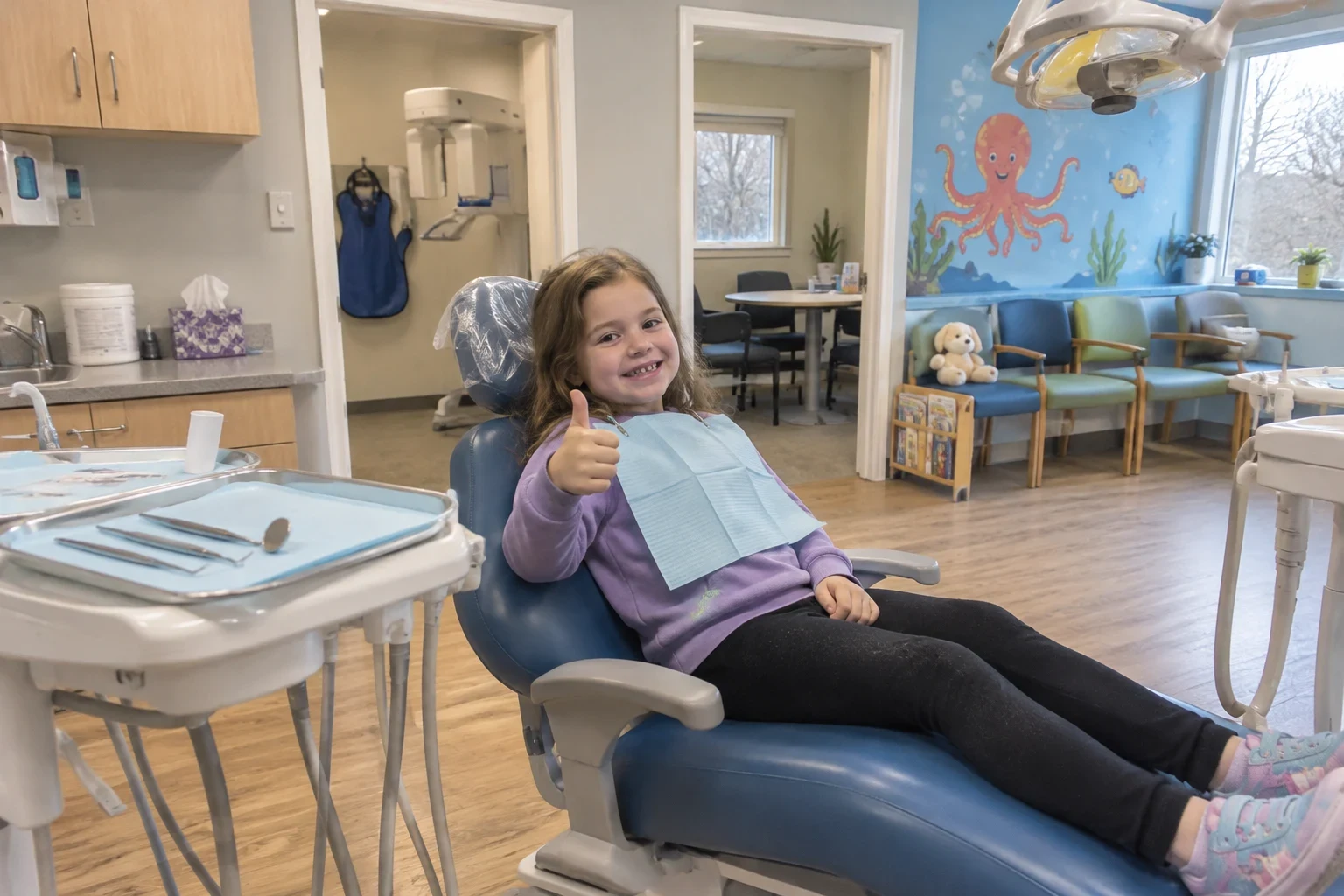
Small cavities are quick to fix and easy on kids. We serve families from Plympton and nearby towns like Kingston, Halifax and Carver.