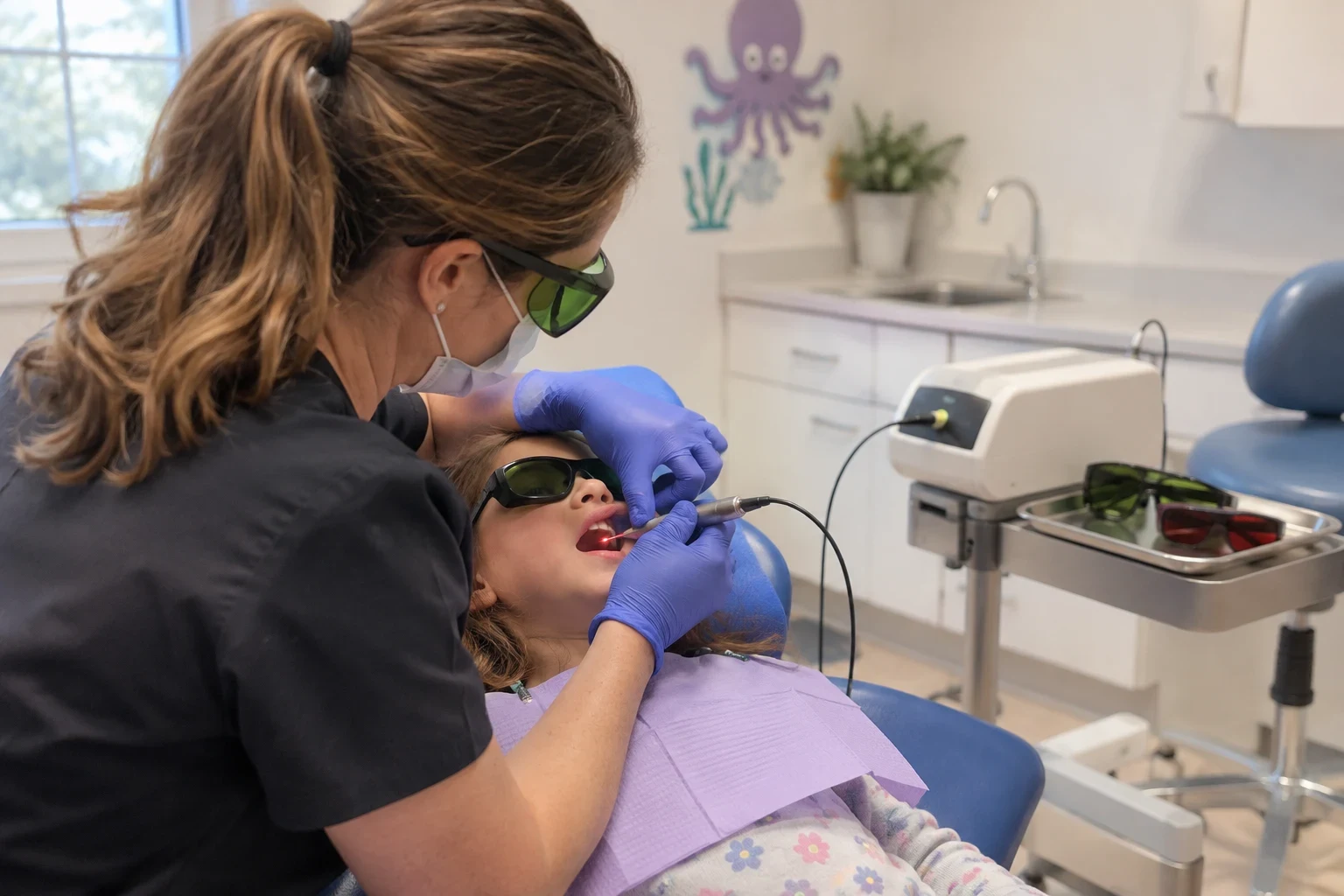
ServicesFrenectomies
Frenectomies in Plympton for Babies, Kids and Teens
When a tight band of tissue under the tongue or lip makes feeding, talking or brushing harder than it should be, a frenectomy can free it up. We look closely at how your child's mouth works first, then tell you honestly whether a release will help.
What a Frenectomy Is and When It Makes Sense
Everyone has small folds of tissue, called frenula, that connect the tongue to the floor of the mouth and the lips to the gums. In some kids that tissue is short, thick or attached too far forward. That's what parents usually hear called a tongue-tie or lip-tie. A frenectomy is a short procedure that releases the tight tissue so the tongue or lip can move freely.
Not every visible frenum needs treatment. Plenty of babies have a frenum that looks prominent but works just fine. We base our recommendation on function: how your child latches, swallows, moves the tongue and holds the lip. If it isn't causing a real problem, we'll tell you so and suggest keeping an eye on it.
We also walk you through the paperwork plainly. That means the consent form you'll sign, what your insurance may ask for before approving the procedure, and what notes from your pediatrician, lactation consultant or speech therapist can help. Families come to us from Plympton and nearby towns like Kingston and Halifax, and everyone gets the same clear explanation before anything is scheduled.
What Your Child's Frenectomy Visit Includes
- A function-based exam
- We check how far the tongue lifts and extends, how the upper lip flips up, and where each frenum attaches. For babies, we'll ask about feeding in detail.
- An honest recommendation
- You'll hear whether a release is likely to help, or whether watching and waiting makes more sense. If it's borderline, we say that too.
- Clear consent and insurance paperwork
- We explain the consent form line by line and help you understand what your plan may need on file. You won't sign anything you don't understand.
- Gentle numbing and comfort care
- We numb the area so your child stays comfortable, and keep the procedure itself short. For older kids who feel anxious, we can talk about whether sedation dentistry is a good fit.
- Aftercare coaching
- Before you leave, we show you the simple stretches that help the area heal without reattaching, and we tell you what normal healing looks like.
- A follow-up check
- We see your child again to make sure the site is healing well and the tongue or lip is moving the way it should.
Signs Your Child May Have a Tongue-Tie or Lip-Tie
Trouble latching or staying latched
A baby who slips off the breast or bottle, makes clicking sounds or tires quickly during feeds may be working around a tight tongue. Painful nursing for mom can be a clue too.
Slow weight gain or long feeds
If feeds take a very long time and your pediatrician has concerns about growth, a restricted tongue is one thing worth ruling out.
A heart-shaped tongue tip
When your child sticks out the tongue, a notch or heart shape at the tip, or a tongue that can't reach past the lips, often points to a short frenum.
Speech sounds that stay unclear
Some kids have a hard time with sounds like l, r, t, d or th because the tongue can't lift high enough. A speech therapist may raise this with you.
An upper lip that won't flip up
A tight lip-tie can make it hard to brush along the front gums, which lets plaque build up and can lead to cavities on the top front teeth. It can also hold a gap open between the front teeth.
Food pocketing or picky textures
Older babies and toddlers who struggle to move food around the mouth, gag easily or avoid certain textures sometimes have limited tongue movement.
How the Day Goes, Step by Step
- 1
Talk and exam
We start by listening to what you've noticed, then examine your child's tongue and lip movement. You'll get a plain answer on whether a release is recommended and why.
- 2
Paperwork, explained
If you decide to go ahead, we review the consent form with you and go over any insurance requirements. Some plans want documentation before they'll cover the procedure, and we'll tell you what that usually means for your timing.
- 3
The release itself
After numbing, we gently release the tight tissue. For most kids the hands-on part takes only a few minutes, and babies can often feed soon afterward.
- 4
Aftercare and follow-up
We show you the stretches to do for the next few weeks and answer every question before you head out. A follow-up visit lets us confirm healing is on track.

What Affects the Cost of a Frenectomy
The cost depends on what your child actually needs, which is why we give you a clear explanation after the exam rather than a guess beforehand. We accept MasterCard, Visa, Discover, most insurance plans and CareCredit Patient Payment Plan. We'll go over your options when you call.
- Tongue, lip or both
- Releasing one frenum is a smaller job than releasing two. Some children need only the tongue or only the lip treated.
- Your child's age and comfort needs
- A quick release in a young baby is different from treating an older child who may need extra comfort measures or sedation.
- Insurance coverage and pre-approval
- Plans differ on how they classify a frenectomy and what documentation they want first. Notes from your pediatrician or therapist can make a difference.
- Follow-up visits
- Most kids need one check after the procedure. If healing needs a closer look, an extra visit may be added.
Frenectomy Questions Parents Ask
Something not covered here? (781) 429-3471
Does a frenectomy hurt my child?
We numb the area first, so the procedure itself should feel like pressure rather than pain. Afterward, the spot can be sore for a few days, much like a small mouth scrape. Most kids are back to normal eating within a day or two, and we'll tell you what you can give for comfort.
Is my baby too young for a frenectomy?
Babies can be treated in the first weeks of life when a tight tongue is making feeding hard. Earlier is often easier, because feeding habits haven't settled yet. We'll still only recommend it if function is truly affected.
Why do I need to do stretches afterward?
The mouth heals quickly, and without gentle stretching the tissue can tighten back up. The exercises take a few seconds several times a day for a few weeks. We'll show you exactly how to do them before you leave.
Will a frenectomy fix my child's speech on its own?
Not always. Releasing the tongue gives it room to move, but many kids still need speech therapy to learn new tongue habits. We're glad to share our findings with your child's speech therapist if that helps.
Will my insurance cover it?
Many plans do cover frenectomies, though some require documentation first. We'll explain what your plan is likely to look for and what records help. Final coverage is always up to your insurer.

Get a Clear Answer About Your Child's Tongue or Lip
Tell us what you've been noticing and we'll set up a visit to look at how your child's mouth moves. New families can get registered on the same call.