ServicesFluoride Treatment
Fluoride Treatment in Plympton
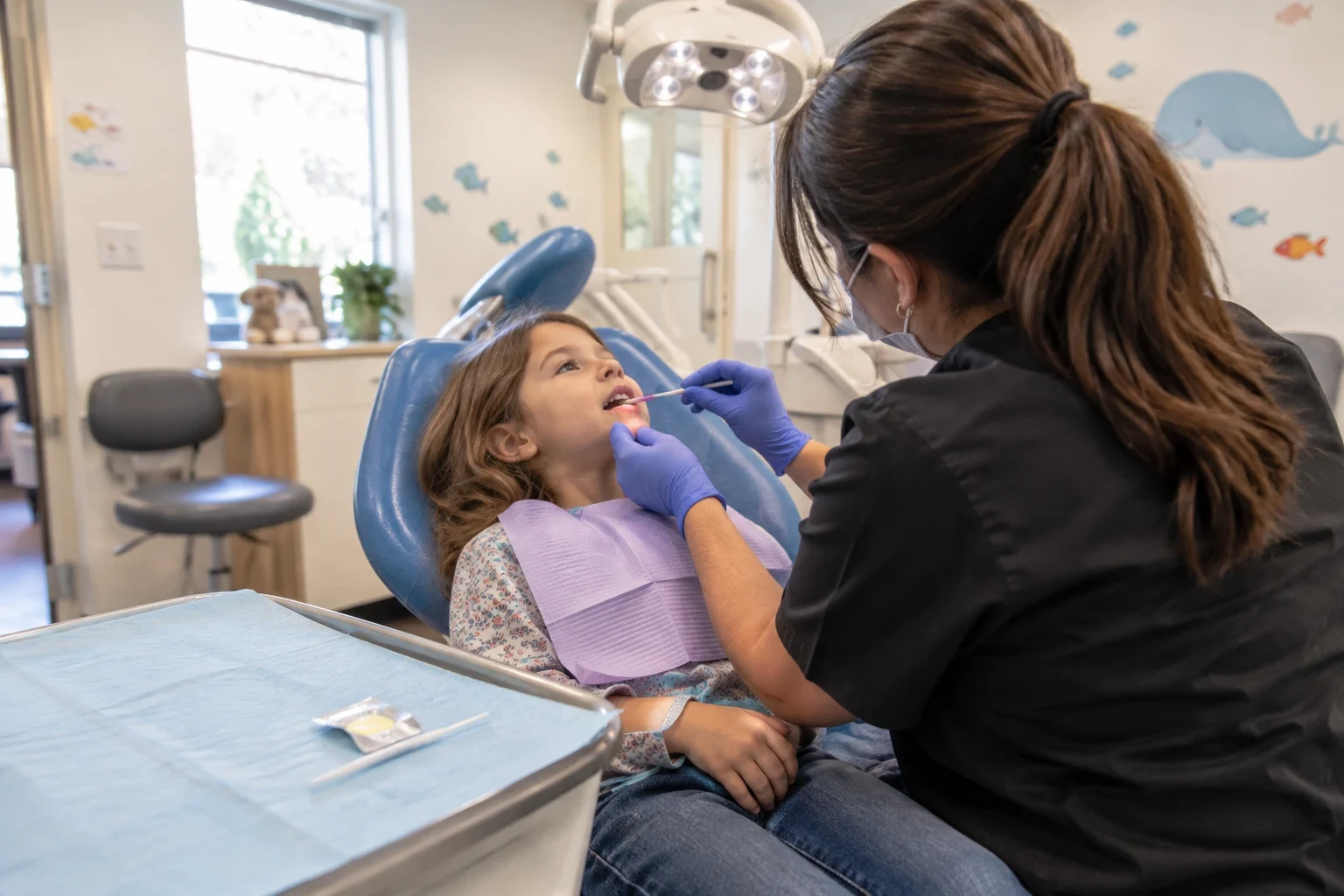
We paint a thin layer of fluoride varnish on your child's teeth to help harden enamel and slow early decay. It takes about a minute, there are no needles or drills, and most kids barely notice it happened. You leave knowing exactly what was applied and why.
What fluoride varnish does for your child's teeth
Enamel is constantly losing and regaining minerals. Every snack or sip of juice tips the balance toward loss, and saliva and fluoride tip it back. Fluoride varnish is a sticky, concentrated coating that sits on the teeth for several hours and gives enamel a strong dose of the minerals it needs to rebuild.
Children's teeth, especially baby teeth and newly erupted adult molars, have thinner enamel than an adult's. That makes them quicker to decay and quicker to benefit from fluoride. National pediatric and dental guidelines recommend varnish starting with the first tooth, and we follow those recommendations for how much to use and how often.
We explain the guidelines in plain terms, show you the amount we use, and only recommend extra applications when your child's risk calls for it. Many families around Plympton rely on private wells that usually have no added fluoride, so a professional application can fill a real gap.
What's included in a fluoride treatment
A quick look first
Before applying anything, we check your child's teeth for chalky white spots, soft areas or cavities. Fluoride helps with early weak spots, but a true cavity needs a filling, and we will tell you which one we see.
Age-appropriate amount
We use a measured single dose sized for your child's age. A toddler gets a much smaller amount than a teenager.
Varnish, not a tray
Varnish is brushed on with a tiny brush and sets on contact with saliva. There is no foam tray to hold and very little to swallow, which makes it a better fit for little kids.
A cavity risk review
We look at diet, brushing habits, water source and past cavities to decide how often your child should get fluoride. Low-risk kids may only need it at regular checkups.
Clear after-care
You get simple instructions on eating, drinking and brushing for the rest of the day so the varnish can do its job.
Signs your child could use extra fluoride
- White chalky spots
- Dull white patches near the gumline are often the first sign enamel is losing minerals. Caught at this stage, fluoride can help them harden again.
- A recent cavity
- If your child had a filling in the past year, their mouth is more prone to new decay. More frequent varnish is a simple way to lower that risk.
- Well water at home
- Most private wells don't carry enough fluoride to protect teeth. Bring the water source up at your visit and we'll factor it in.
- Frequent snacks or sippy cups
- Grazing through the day, juice in a bottle or milk at bedtime keeps teeth under constant acid attack.
- Braces or a space maintainer
- Brackets and bands trap plaque in spots that are hard to brush. Fluoride gives the enamel around them extra protection.
How the visit goes
- 1
Clean and check
Fluoride is usually applied right after your child's cleaning, so the teeth are free of plaque and the varnish can reach the enamel.
- 2
Dry the teeth
We gently wipe the teeth with gauze. Kids often find this part a little ticklish.
- 3
Paint on the varnish
We brush a thin coat on every tooth surface. It takes under a minute, and many kids choose their favorite flavor first.
- 4
Go over the rest of the day
Your child can leave right away. We'll remind you to stick with soft foods and cool drinks for a few hours and to skip brushing until the next morning.
What affects the cost of fluoride treatment
Fluoride varnish is one of the simpler things we do, and its cost is usually modest compared with treating a cavity. What you pay depends mostly on your insurance plan and how often your child needs it. We'll walk you through it on the phone before your visit so nothing on the bill comes as a surprise.
- Your insurance plan
- Many plans cover fluoride for children up to a certain age and a set number of times per year. We accept most insurance plans and can help you check what yours includes.
- How often it's applied
- Most kids get varnish at their twice-yearly checkups. Higher-risk kids may need it more often, which can go beyond what a plan covers.
- Part of a regular visit or on its own
- Adding fluoride to a scheduled cleaning is the usual route. A separate fluoride-only visit is also possible when timing calls for it.
- Payment options
- We accept MasterCard, Visa, Discover, most insurance plans and CareCredit Patient Payment Plan.
Fluoride treatment questions from parents
- Is fluoride varnish safe for young kids?
- Yes. Varnish uses a very small, measured amount that sticks to the teeth instead of being swallowed. Pediatric guidelines recommend it from the first tooth on. We're happy to show you the dose before we apply it.
- What can my child eat after the treatment?
- Soft foods and cool or room-temperature drinks are best for the next few hours. Skip crunchy, sticky or hot foods for that stretch. Wait until the next morning to brush so the varnish has time to work.
- Will it turn my child's teeth yellow?
- Some varnishes leave a slight yellow tint for the rest of the day. It brushes off the next morning and does not stain the teeth.
- How often does my child need fluoride?
- Most kids do well with an application at each checkup, about every six months. If your child has had cavities, drinks well water or wears braces, we may suggest it more often. We'll explain our reasoning either way.
- Should my child also get sealants?
- They do different jobs. Fluoride strengthens all the enamel, while sealants cover the deep grooves on back teeth where brushes can't reach. Many kids benefit from both, and we can talk about sealants at the same visit.
Ready to give your child's enamel a boost?
Fluoride fits easily into your child's next exams and cleanings visit. A quick phone call gets it on the calendar, and new families can register at the same time.