ServicesExtractions
Gentle Tooth Extractions for Kids in Plympton
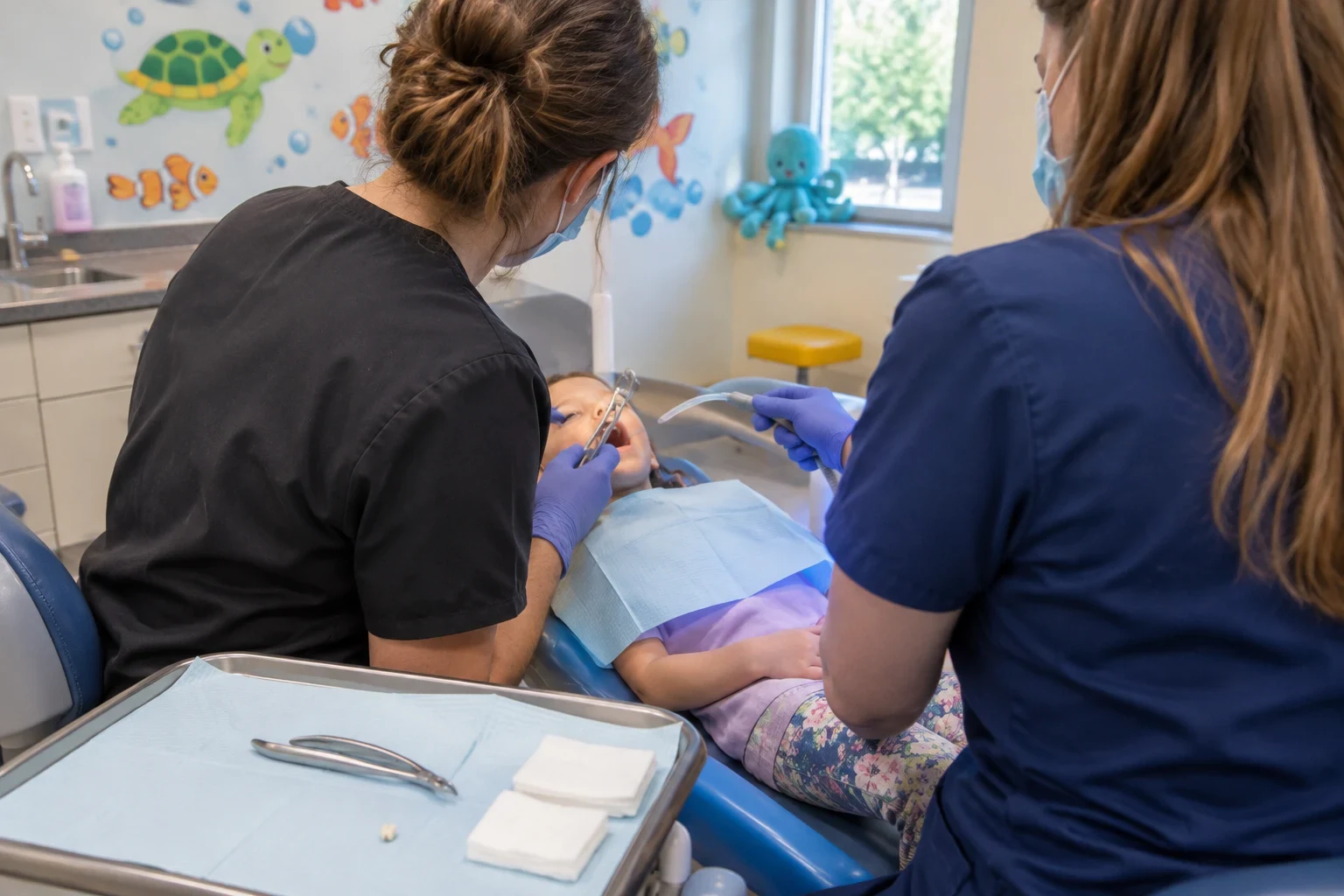
Sometimes a tooth needs to come out: a baby tooth that won't budge, a tooth too damaged to fix, or crowding that blocks the way. We check first, explain why, numb carefully and send you off with clear aftercare, so your child leaves comfortable.
When taking a tooth out is the right call
Our first goal is always to keep a tooth when we can. A filling, a pediatric crown or a root canal on a baby tooth often saves it. An extraction is what we recommend when keeping the tooth would cause more trouble than removing it, such as an infection spreading toward the adult tooth underneath.
Before anything happens, we show you the X-ray and tell you plainly what we see, what the options are and what we suggest. You sign a consent form only after your questions are answered. If your insurance plan asks for paperwork ahead of time, we tell you that too, so nothing catches you off guard.
Kids from Plympton, Kingston, Halifax and nearby towns come to us for this. Most extractions are quick, and most children are back to normal eating within a day or two.
What your child's extraction includes
- 01
An exam and X-ray first
We look at the tooth, the gums and the roots on an X-ray. For baby teeth, we also check where the adult tooth sits underneath so we can protect it.
- 02
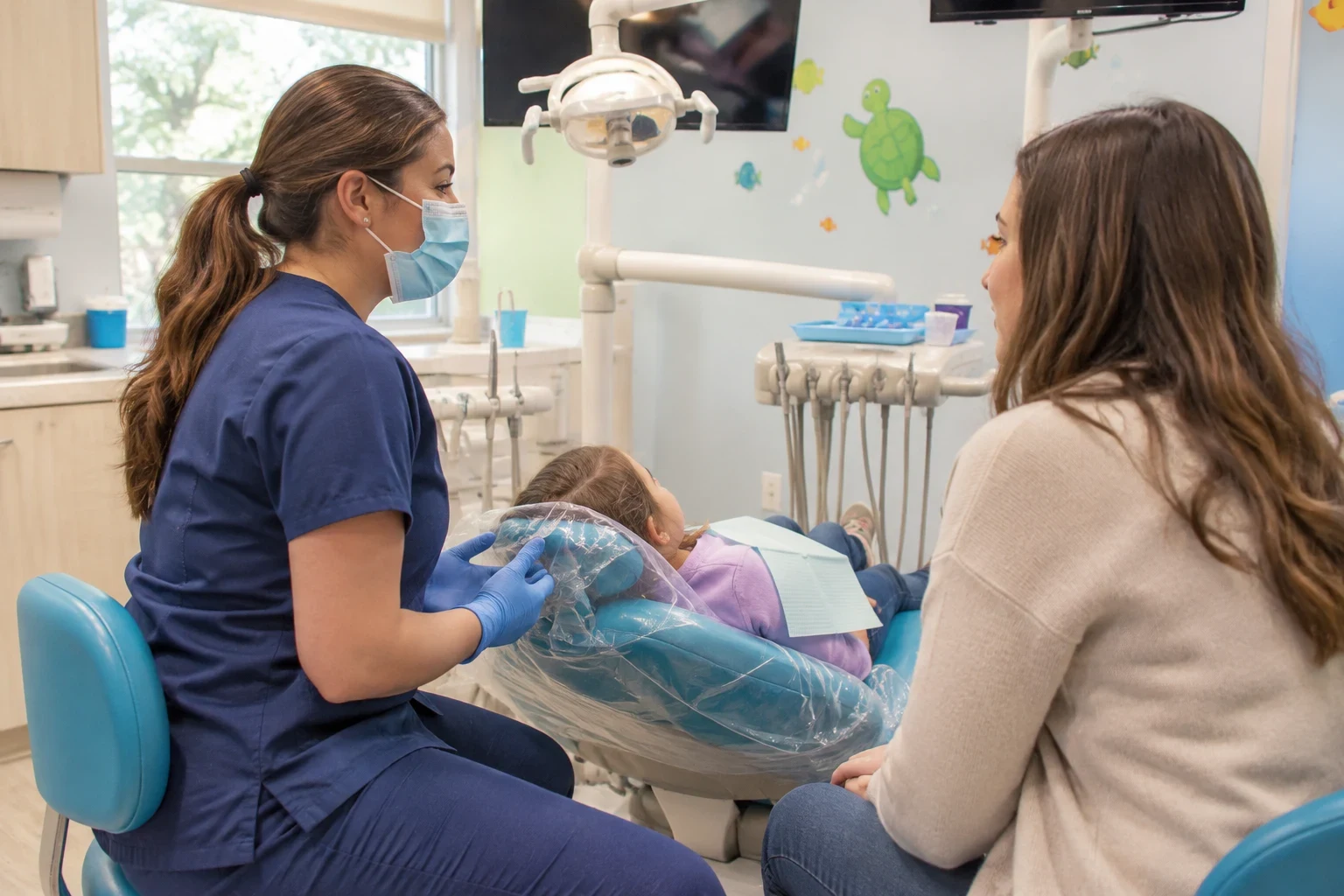
A plain-language talk with you
We explain why the tooth should come out and what the alternatives are. You decide, and we put the plan in writing.
- 03
Careful numbing
We use a numbing gel before the local anesthetic so the pinch is barely noticed. We use simple, friendly words with kids instead of scary ones.
- 04
Calming options when needed
Some kids are anxious or need more than one tooth out. We can talk through our sedation dentistry options so the visit stays calm.
- 05
Planning for the gap
When a baby molar comes out early, the teeth beside it can drift and block the adult tooth. We'll tell you if a space maintainer makes sense.
- 06
Written aftercare
You leave with simple instructions on gauze, food, brushing and what is normal in the first few days.
Questions about Extractions?
Call(781) 429-3471Signs your child may need a tooth removed
A baby tooth that won't come out
If the adult tooth is coming in behind or beside a baby tooth that is still firm, you may see two rows of teeth. This is common with lower front teeth and often needs a little help.
Deep decay that can't be fixed
When a cavity reaches too far into a baby tooth, a filling or crown may no longer hold. Removing it can stop pain and protect the tooth underneath.
Swelling or a bump on the gum
A pimple-like bump near a tooth can mean an infection. Let us see it soon, since infection near a baby tooth can affect the developing adult tooth.
A cracked tooth after a fall
Kids bump their mouths often. If a tooth is broken below the gumline, it may not be saveable.
Crowding or extra teeth
Sometimes a tooth is removed to make room, or because an extra tooth is in the way. We look closely before recommending this.
How the visit goes
- 1
Check-in and a quick review
We go over your child's health history and any medicines. We confirm the tooth and the plan with you one more time.
- 2
Numbing with kid-friendly words
We apply numbing gel, then a local anesthetic. We tell your child what they'll feel, like pressure and wiggling, but not pain.
- 3
Gentle removal
We loosen the tooth slowly and lift it out. For most baby teeth this takes only a few minutes.
- 4
Gauze and a short rest
Your child bites on gauze to help a clot form. We check the spot before you go and walk you through aftercare.
- 5
A follow-up if needed
If we placed stitches or a space maintainer is coming next, we schedule that visit with you before you leave.
What affects the cost of an extraction
Every extraction is a little different, so we explain the expected cost after the exam and before we start. We accept MasterCard, Visa, Discover, most insurance plans and CareCredit Patient Payment Plan. If your plan needs pre-approval, we'll let you know.
- Simple or surgical
- A loose baby tooth is simpler than a tooth broken at the gumline or one with long roots. More involved removals take more time.
- Number of teeth
- Removing more than one tooth in a single visit changes the total, though it can mean fewer trips for your child.
- Sedation
- If your child needs sedation to stay calm and safe, that is a separate part of the cost.
- X-rays and follow-up care
- Imaging, and a space maintainer if one is needed afterward, are priced separately.
- Your insurance plan
- Coverage differs from plan to plan. We help you understand what your plan lists before treatment.
Questions parents ask about extractions
Will it hurt my child?
The numbing does the hard work, so most kids feel pressure, not pain. Some soreness afterward is normal for a day or two. Children's pain relievers, as directed for your child's age and weight, usually help.
Why not just wait for the baby tooth to fall out?
Often waiting is fine, and we'll say so. But an infected baby tooth can harm the adult tooth below it, and a stuck baby tooth can push the new one out of line. We only recommend removal when waiting carries a real risk.
What can my child eat afterward?
Soft, cool foods like yogurt, applesauce and pasta work well for the first day. Skip straws and very hot foods at first so the clot stays in place. Your written aftercare sheet covers this.
Will my child need a space maintainer?
Not always. Front baby teeth usually don't need one. If a back molar comes out years before the adult tooth is due, a space maintainer can keep the gap open.
Can I stay with my child?
Yes, many parents stay in the room. Some kids do better with a little independence, and we'll talk with you about what fits your child.
Talk with us about your child's tooth
Tell us what you're seeing and we'll find a time for an exam. New patients can register during the same call.