ServicesPediatric Crowns
Pediatric Crowns in Plympton
When a cavity is too big for a filling, a crown can keep your child's tooth in place and working. We explain why it's needed, which type fits, and what the visit involves before anything starts, so you and your child both know what to expect.
When a Filling Isn't Enough
A pediatric crown is a small cap that covers the whole tooth. We use crowns when decay has weakened so much of a baby tooth that a filling would likely crack or fall out. Back molars carry most of the chewing load, and many of them need to stay in place until around age 10 to 12 to hold room for the adult teeth underneath.
Saving the tooth matters for more than comfort. Losing a baby molar early can let neighboring teeth drift and crowd the space, which can lead to a space maintainer or more work later. A crown keeps the tooth working for the years it still has.
We walk you through the clinical reasons in plain language: what we saw on the X-ray, why a crown beats a filling for this tooth, and what happens if you wait. You get the full picture and the time to ask questions before you decide.
What Crown Treatment Includes
- 01
An exam and X-rays first
We look at how deep the decay goes and whether the nerve is involved. That tells us if the tooth needs a crown alone or a pulp treatment first.
- 02
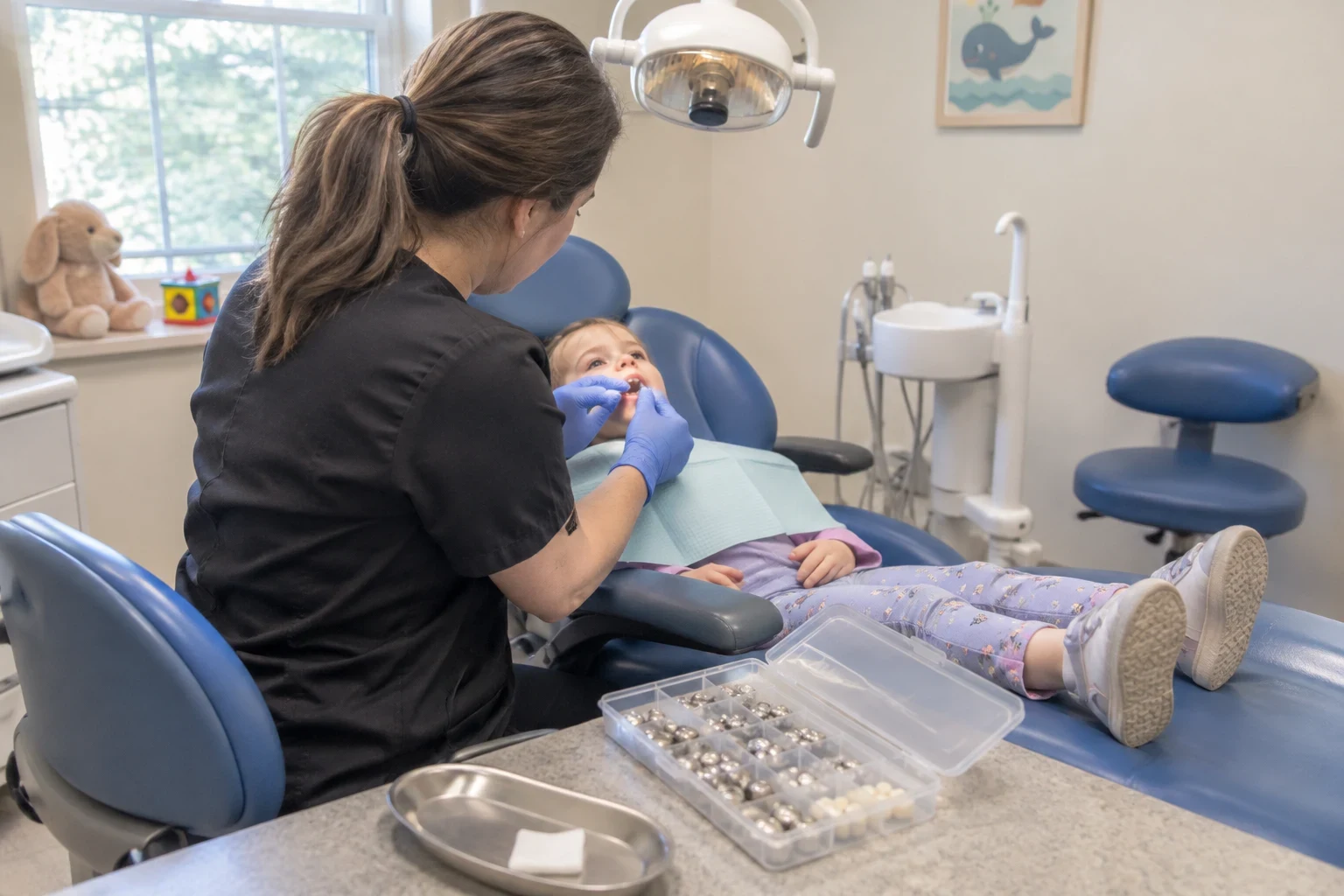
Stainless steel crowns for back teeth
These preformed silver caps are the long-standing standard for baby molars. They are strong, fit in one visit, and fall out naturally with the tooth.
- 03
Tooth-colored options
For front teeth, and for back teeth when it suits the case, we can discuss white zirconia or composite crowns. We tell you honestly where each holds up well and where it doesn't.
- 04
Pulp treatment when needed
If decay has reached the nerve, we may need to clean it out before placing the crown. Our Root Canals page explains how that works for baby teeth.
- 05
Comfort for the visit
Numbing gel goes on before the local anesthetic so the shot is easier. For anxious kids or longer visits, we can talk through the options on our Sedation Dentistry page.
Questions about Pediatric Crowns?
Call(781) 429-3471Signs Your Child May Need a Crown
A large or dark cavity
A brown or black spot covering much of a molar's chewing surface often means more tooth is gone than a filling can rebuild.
A filling that keeps failing
If the same tooth has been filled more than once and keeps breaking down, a crown usually lasts longer.
A chipped or cracked tooth
Falls and sports bumps can break a tooth. A crown holds the remaining pieces together and protects them.
Pain when chewing or with sweets
Sensitivity that comes and goes, or a child who chews on one side, can mean decay is getting close to the nerve.
Weak or chalky enamel
Some kids are born with soft, poorly formed enamel that wears away fast. Crowns can protect those teeth from breaking down early.
How the Crown Visit Goes
- 1
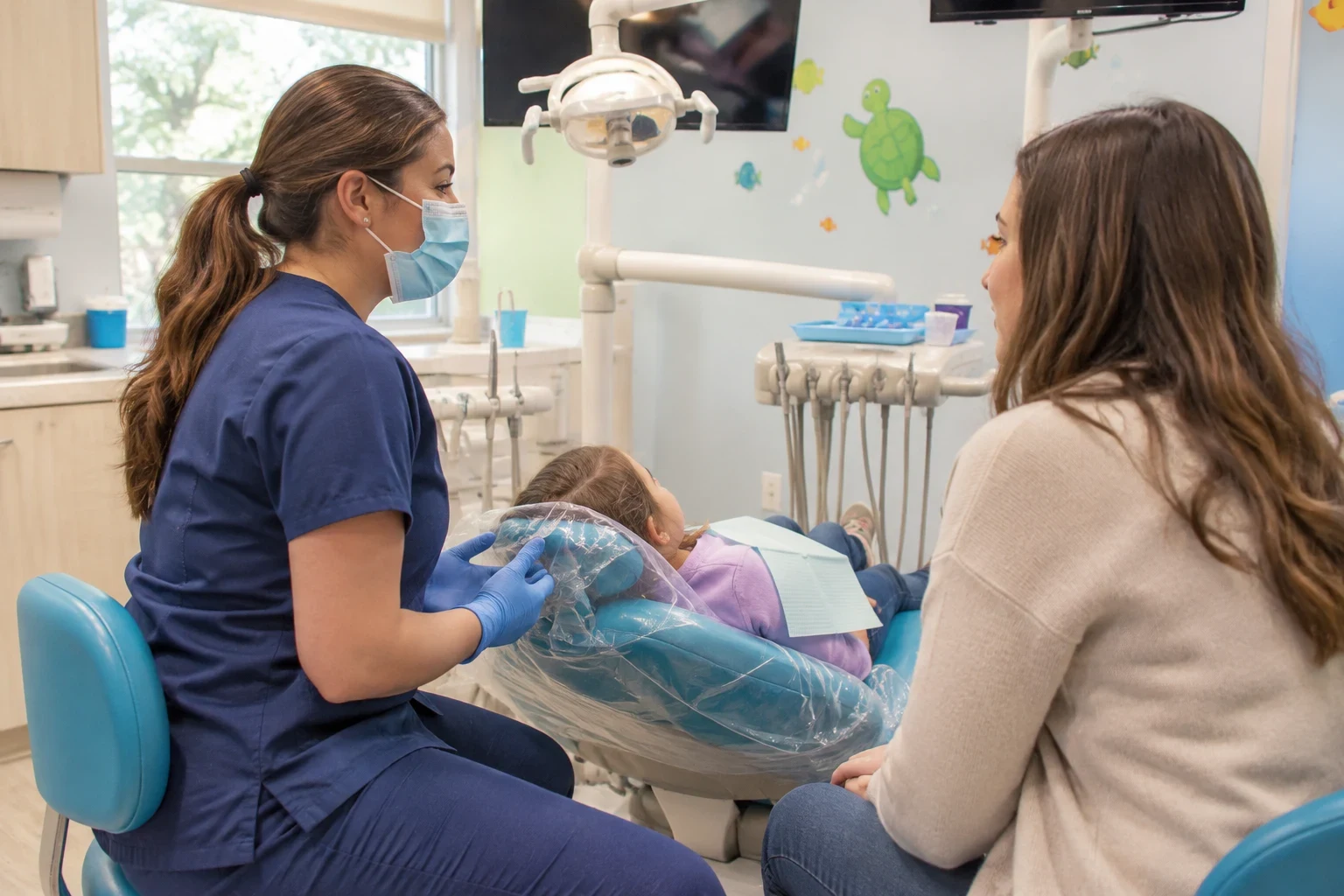
We explain the plan
Before the day of treatment, we go over which tooth, which crown type and why. You'll know the steps, the comfort options and what your child may feel afterward.
- 2
Numbing and keeping the area dry
We numb the tooth and use a small rubber shield or cotton to keep it dry. We tell your child what each step will feel like using kid-friendly words.
- 3
Removing decay and shaping
We clear out the decay, treat the nerve if needed, and gently shape the tooth so the crown sits snugly.
- 4
Fitting the crown
We pick the right size, check the bite, and cement it in place. Most single crowns are done in one visit.
- 5
Going home
The lip and cheek stay numb for a few hours, so watch that your child doesn't chew on them. Soft foods that evening help, and the gums usually settle within a day or two.
What Affects the Cost of a Crown
Every crown case is a little different, so we go over the specifics with you before treatment and answer cost questions in plain terms. We accept MasterCard, Visa, Discover, most insurance plans and CareCredit Patient Payment Plan. Coverage varies by plan, and we can explain how your benefits typically apply to the treatment we recommend.
- Crown material
- Stainless steel crowns and tooth-colored crowns are made differently and are often treated differently by insurance plans.
- Number of teeth
- One crown is a shorter visit than several. Treating multiple teeth at once can sometimes mean fewer appointments overall.
- Nerve treatment
- If the decay has reached the pulp, the tooth needs that treatment before the crown, which adds to the work involved.
- Comfort and sedation
- Nitrous oxide or other sedation adds its own cost. Many kids do fine with numbing alone, and we'll tell you honestly what we think your child needs.
Questions Parents Ask About Crowns
Why put a crown on a baby tooth that will fall out anyway?
Many baby molars stay until age 10 to 12. Losing one early can cause pain, infection and crowding of the adult teeth. A crown keeps the tooth healthy and holding its space until it's ready to come out on its own.
Will the silver crown look strange?
Stainless steel crowns are visible when your child opens wide, but on back teeth most people never notice them. If appearance matters to you, ask about tooth-colored options and we'll tell you whether they suit that tooth.
Does getting a crown hurt?
We numb the tooth fully, so your child should feel pressure rather than pain. Some gum soreness afterward is normal, and children's pain relievers recommended by your pediatrician usually help.
How do we care for the crown?
Brush and floss it like any other tooth. Avoid very sticky candies like caramels and taffy, which can loosen a crown. We check it at each regular exam and cleaning.
What happens to the crown when the tooth falls out?
The crown comes out with the baby tooth, and the adult tooth grows in underneath as normal. Nothing extra needs to be removed.
Let's Take a Look at That Tooth
We see families from Plympton, Kingston, Halifax and nearby towns. Set up a visit and we'll check the tooth, explain what we find, and talk through the options with you.